
Understanding Subsonic Ammunition and Suppressor Performance
If you’ve spent any time around suppressors, you’ve probably heard the term “subsonic ammo.” While many shooters know it’s quieter, not everyone understands why.
Simply Put
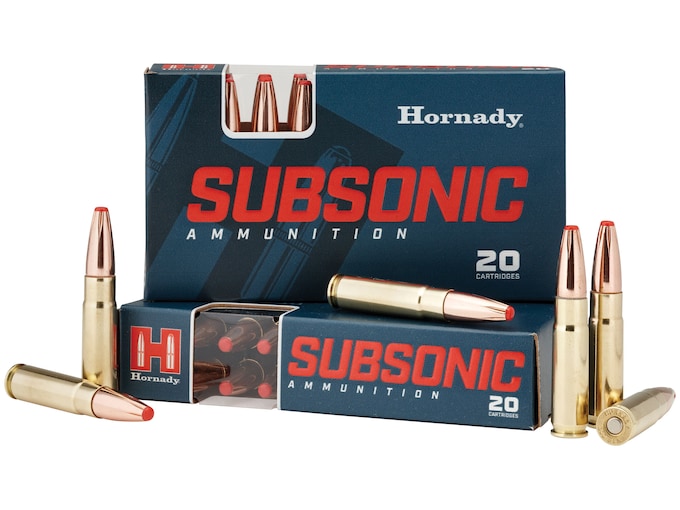
Subsonic ammunition is loaded to travel below the speed of sound, which is approximately 1,125 feet per second, depending on atmospheric conditions. When the bullet exceeds this speed, it creates a sharp sonic crack similar to a miniature sonic boom. This crack occurs throughout the bullet’s flight path and cannot be eliminated by a suppressor.
The Suppressor’s Job
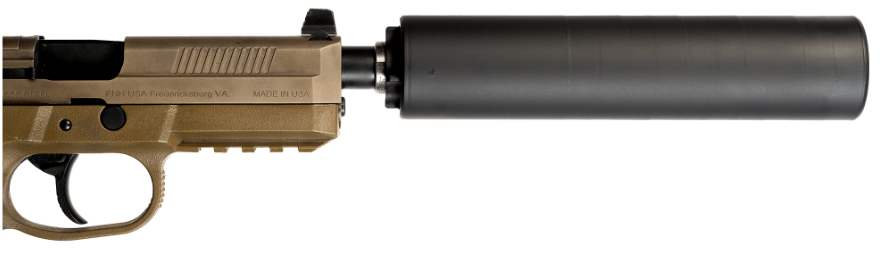
A suppressor’s primary job is to reduce the noise created by expanding gases leaving the muzzle. However, if the projectile itself is breaking the sound barrier, you’ll still hear the unmistakable crack downrange. By using subsonic ammunition, that sonic crack is eliminated, allowing the suppressor to do its job much more effectively. The result is a significantly quieter shooting experience, reduced noise fatigue, and just less annoying to those around you. This is especially noticeable in calibers like 22LR, .300 Blackout, 9mm, and .45 ACP, which are popular choices for suppressed shooting.
But Do I Have To?
Subsonic ammunition is not required but is a great complement to your setup.
The Clause: There are a few suppressors that require subsonic ammo. This is because of using a pistol-oriented, lightweight suppressor on a rifle caliber. Do your diligence and find the manufacturer’s specs to verify. If you are unsure, feel free to reach out, and we will be happy to help.
The Sacrifice
You have to remember that subsonic ammunition typically sacrifices velocity & energy in exchange for reduced noise. This is going to leave you with 2 potential obstacles
Point of Impact Shift – means you will inevitably see a shift in point of impact. For many shooters, especially those focused on recreational shooting, training, or maximizing suppressor performance, it’s a worthwhile tradeoff.
Energy Loss – Your semi-auto cycles using the recoil and gases from your carttriges your shooting. If you reduce the energy and gas pressure they are putting out, you will inevitably change how it affects the fireram. Some firearm designs are more forgiving than others.
For example, if you purchase a generic AR15 in 300 Blackout and grab a few random boxes of 300BO Subsonic, you will likely be having issues short-cycling your rifle. You may notice spent casings that are hanging out of the ejection port. Or pull the trigger, and nothing happens, & you find there is no cartridge in the chamber, spent or live. Your gun can’t completely cycle due to the loss of energy. You need to make some changes to your setup accordingly.
If your goal is the quietest possible setup, pairing a quality suppressor with the right subsonic ammunition is hard to beat. Understanding how the two work together can help you get the most out of your suppressed firearm.
Check out our in-stock suppressors here